The Lost Basin Mining District
The Geology of the Lone Jack Gold Mine
Introduction
The Lone Jack is a placer gold mine, and its geology is the geology of placer deposits: gold that formed deep in the earth, was liberated from its host rock over immense spans of time, and came to rest in gravels a prospector can work with hand tools. Understanding that journey — from hydrothermal vein to dry desert gravel — explains both why the Lost Basin Mining District has attracted prospectors since the nineteenth century and why its mines, including the Lone Jack, remain strictly surface operations.
Regional Setting
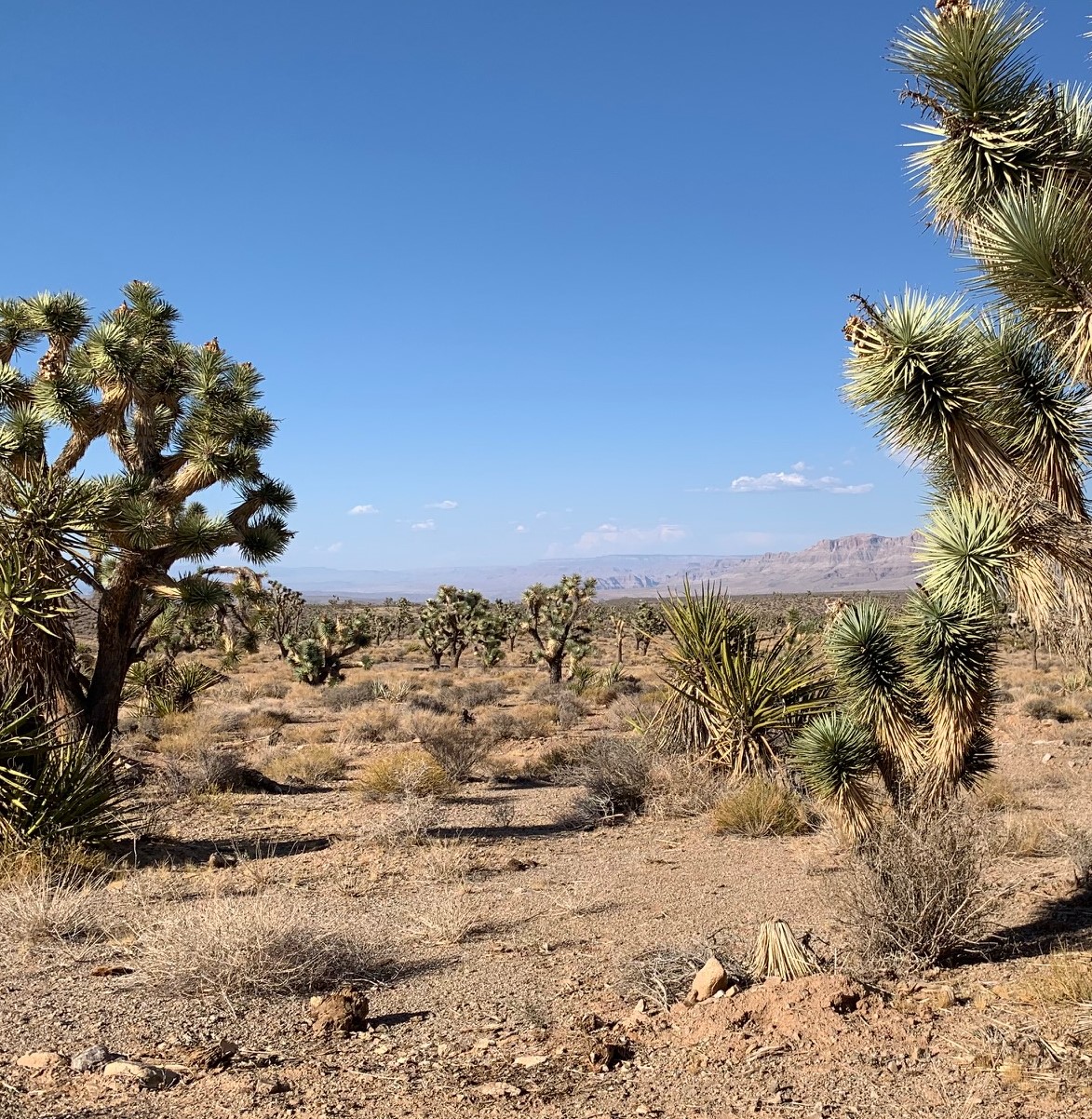
The Lost Basin district occupies arid, rugged terrain in northwestern Arizona, near the transition between the Colorado Plateau and the Basin and Range province. The bedrock of the region is dominated by ancient Precambrian (Early Proterozoic) crystalline rocks — granite and gneiss roughly 1.7 billion years old — exposed across broad expanses of the desert as mountainous inselbergs and buried pediments.
This basement complex is the source of everything the district's miners have chased. The neighboring Gold Basin district shares the same geological framework, and the two districts are usually studied together; the definitive modern treatment is USGS Professional Paper 1361, which maps and describes the geology and gold mineralization of both.
Gold in the Bedrock: Quartz Veins
Within the Proterozoic granite and gneiss, gold occurs primarily in small quartz veins and associated shear zones. These veins were deposited by hydrothermal fluids — hot, mineral-laden water circulating through fractures in the crust — which precipitated quartz and trace gold along their pathways as they cooled and reacted with the wall rock.
The veins of the Gold Basin–Lost Basin area are individually small. They were never the kind of bonanza lode deposits that drove deep-shaft mining elsewhere in the West. Instead, they are numerous, widely distributed, and typically only inches to a few feet wide — which matters enormously for what came next.
From Vein to Placer
Once gold-bearing quartz veins are exposed at the surface, weathering takes over. Over millions of years, rain, temperature swings, and root action broke the granite apart, dissolving and crumbling the host rock while leaving the chemically inert gold behind. As the decomposed rock eroded, gravity and infrequent but violent desert flash floods moved the freed gold downhill, concentrating it wherever the flow slowed: gulches, channel bottoms, bench gravels, and the residual debris left mantling the slopes.
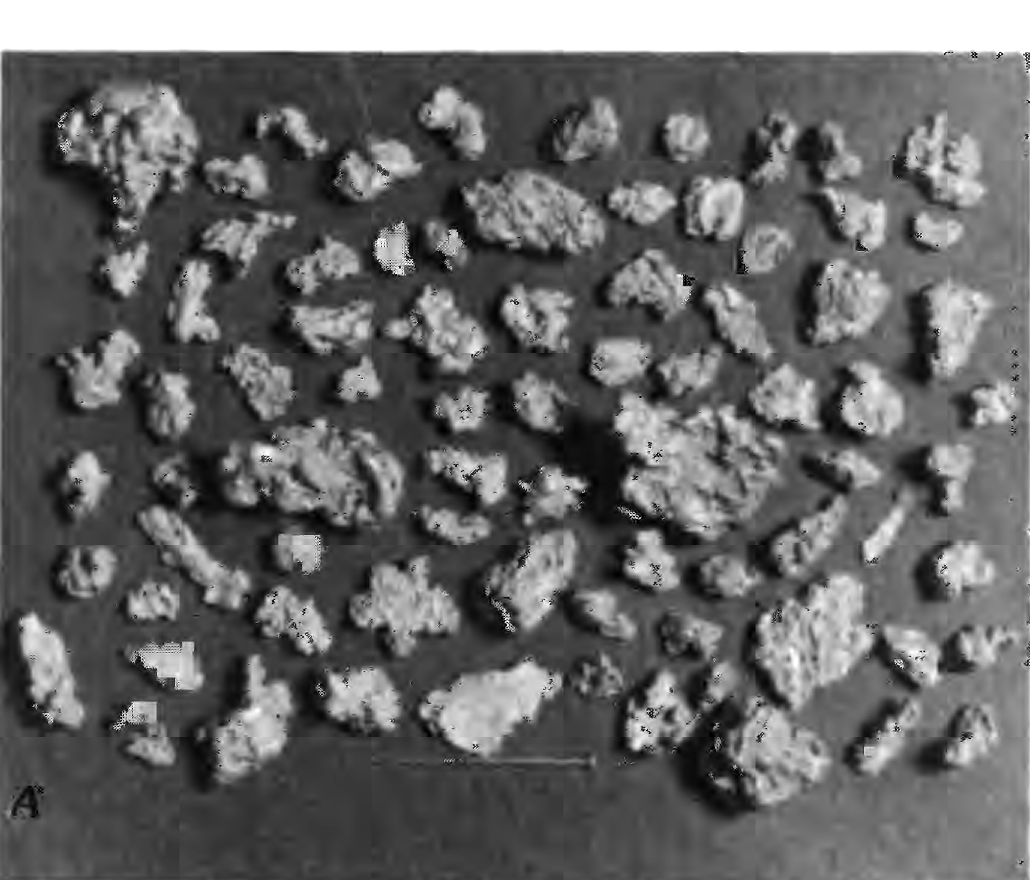
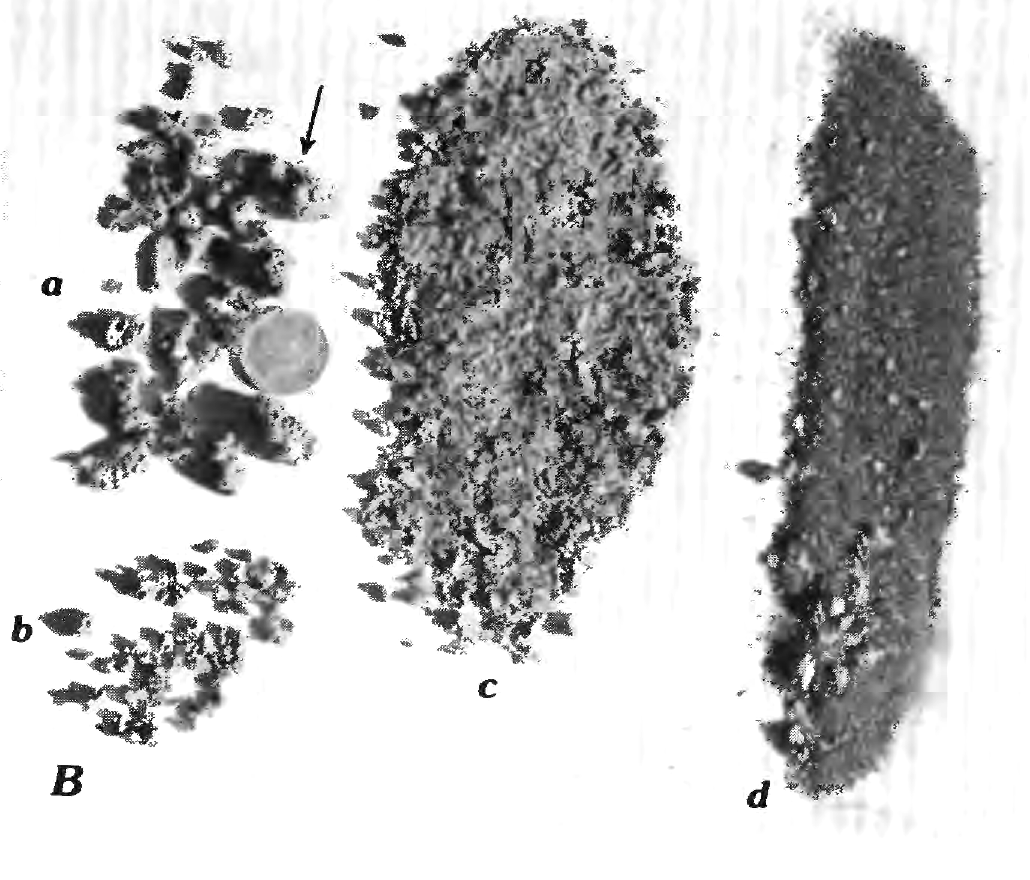
Because this transport history is short — the placers sit close to their source veins — the gold has not traveled far enough to be worn smooth. Lost Basin placer gold is characteristically coarse and angular: flat flakes, rough pieces with attached quartz grain impressions, and occasional small nuggets. That angularity is a classic signature of "dry" placers near their source, and it distinguishes local gold from the well-rounded flour gold found hundreds of miles downstream on the Colorado River.
The Nature of the Deposits
The Lone Jack's workings target shallow surficial gravels and decomposed granite rather than any consolidated ledge. In the district these deposits take several forms: residual placers lying directly above weathered vein material, alluvial concentrations in ancient and modern drainages, and bench gravels stranded well above current channels by erosion of the older landscape.
A thin caliche layer — calcium carbonate cemented by evaporating soil moisture — commonly underlies or binds the gravels and often acts as a natural trap, or false bedrock, where fine gold settles. Prospectors in the district learn quickly to sample down to and just into this layer.
Why Dry Methods Rule
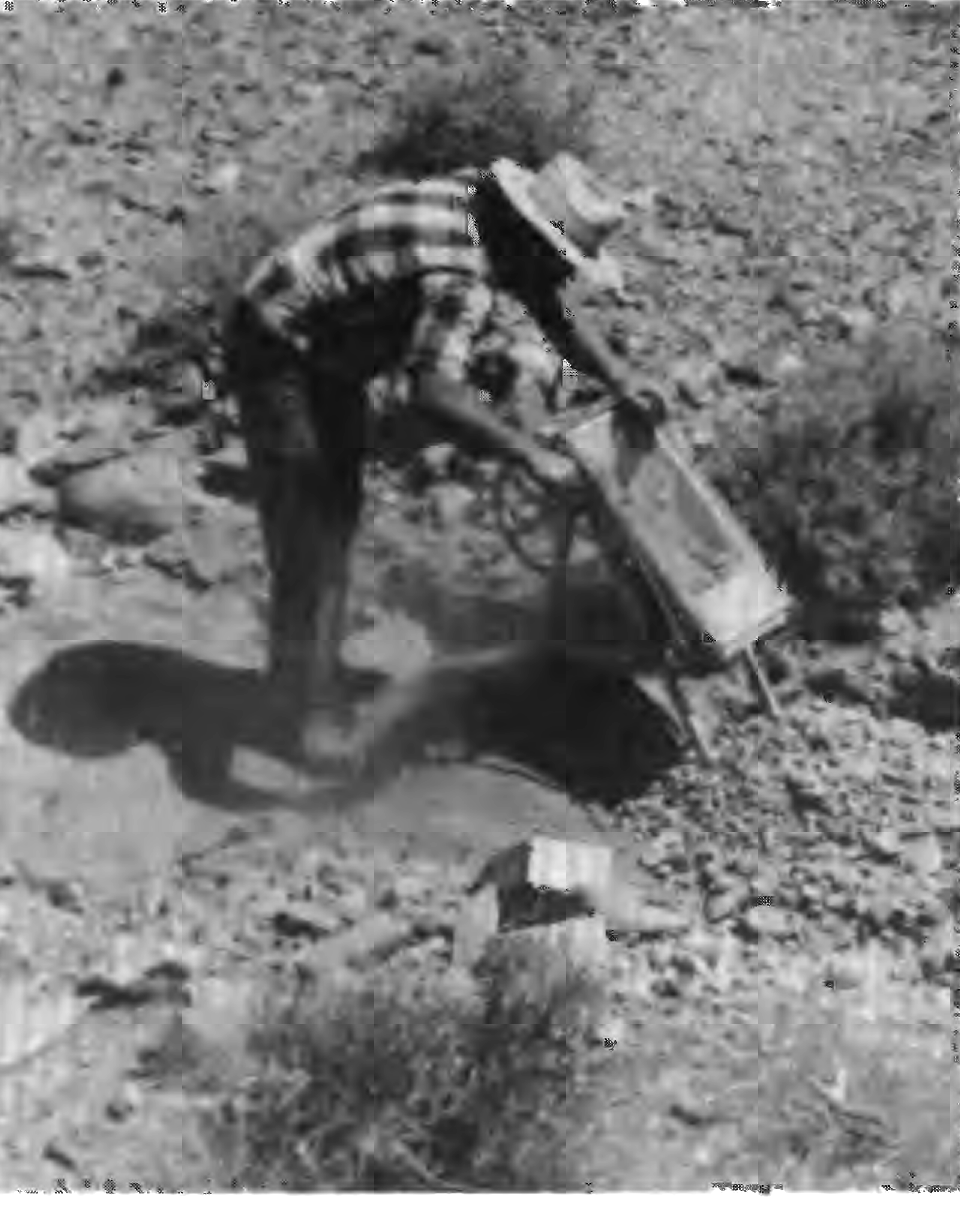
The same aridity that limited historical production shapes how the ground is worked. With no reliable surface water, conventional sluicing is impractical, so both the old-timers and today's hobbyists rely on dry concentration: dry washers that use air flow across a riffled box to winnow away light sand while heavy gold drops behind the riffles, plus panning at home using carried-in water, and metal detecting for pieces too large for the wind to move.
Metal detecting works particularly well here. The shallow gravels, sparse vegetation, and coarse character of the gold make even small nuggets and chunky flakes findable with modern detectors — one reason the region became famous twice over, first for gold and later for meteorites.
Strictly Placer
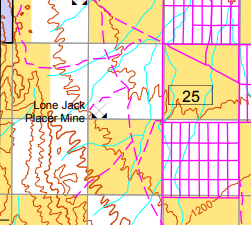
To be explicit about the Lone Jack itself: it is a placer mine, and only a placer mine. There are no shafts, adits, or underground workings, and no lode mining has been documented there. All recovery — historically and today — comes from surface gravels worked with dry methods.
Reading the Ground Today
A hobby prospector reading Lost Basin country looks for the same clues the first miners did: exposures of granitic bedrock studded with quartz stringers, old drainage channels cut into the pediment, bench gravels perched above modern washes, and desert pavement where centuries of wind have stripped fines and left heavies concentrated on the surface. Sampling — pan tests at regular intervals — remains the only honest way to evaluate any of it.
Conclusion
The geology of the Lone Jack is a story of patience: gold deposited in tiny quartz veins over a billion years ago, released by slow erosion, and gathered into modest but persistent placers. It will never make anyone rich, and it doesn't need to. For a hobby miner, few classrooms compare to a gravel bar in the Lost Basin with a dry washer and an afternoon.
FAQs
-
What kind of deposit is the Lone Jack?
A shallow placer deposit — gold concentrated in surface gravels and decomposed granite derived from nearby quartz veins. There are no shafts or underground workings. -
What does the gold look like?
Coarse and angular, since it hasn't traveled far from its source: rough flakes and occasional small nuggets, sometimes with quartz attached. -
Where can I read the primary science?
USGS Professional Paper 1361 covers the geology and gold mineralization of the Gold Basin and Lost Basin mining districts. -
Can I visit or prospect the Lone Jack?
No. It is private ground and closed to visitors.